
When considering your options for best-in-class office printing and copying, choosing the right paper stock can make a significant difference in the quality and professionalism of your output. Whether you’re producing everyday memos, client presentations, or high-quality marketing materials, the paper you use plays a vital role. Here’s a guide to selecting and using the best paper stocks for your office printer and copier, with examples of different weights and sizes for specific applications.
Why Paper Stock Matters
Using the right paper stock impacts:
- Print quality: Certain stocks enhance color vibrancy and clarity.
- Durability: Heavier weights hold up better for frequent handling.
- Impression: Premium paper elevates the perception of your brand.
Understanding Paper Stock Basics
1. Weight
Measured in pounds (lbs) or grams per square meter (gsm), this refers to the thickness and sturdiness of the paper. Common weights include:
- 20–24 lbs (75–90 gsm): Standard office paper.
- 28–32 lbs (105–120 gsm): Premium paper for presentations and flyers.
- 65–110 lbs (176–298 gsm): Cardstock for business cards and postcards.
2. Size
- Letter or A4 (8.5″x11″): Standard for most documents.
- Legal (8.5″x14″): For contracts and agreements.
- Tabloid or A3 (11″x17″): Ideal for charts, posters, and booklets.
Choosing the Right Paper for Specific Applications
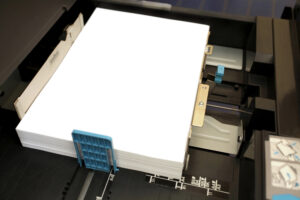
1. Everyday Office Printing
Recommended Stock: 20–24 lbs (75–90 gsm), standard letter size.
Why: Lightweight and cost-effective, this stock is ideal for high-volume printing.
2. Client Presentations
Recommended Stock: 28–32 lbs (105–120 gsm), letter size or legal if needed.
Why: A thicker paper provides a more polished look and feels premium in hand.
3. Marketing Materials
Recommended Stock: 65–80 lbs (176–216 gsm), letter or tabloid size depending on design.
Why: Heavier paper enhances durability and color quality for high-impact visuals.
4. Posters and Large Graphics
Recommended Stock: 28–32 lbs for lightweight posters; 80–100 lbs for premium posters.
Why: Lighter stocks are easier to hang, while heavier ones often offer better presentation quality.
5. Specialty Items
Recommended Stock: 80–110 lbs (216–298 gsm), typically letter size.
Why: These applications demand sturdy, high-quality paper to make a lasting impression.
Tips for Using Specialty Paper in Office Printers
- Check Compatibility: Not all printers are designed to handle thicker stocks. Refer to your printer’s specifications for maximum paper weight.
- Adjust Printer Settings: Many printers and copiers have options to optimize for different paper types. Select settings for “Cardstock” or “Glossy” if applicable.
- Feed Paper Correctly: Load specialty paper in the manual feed tray for best results, especially with heavier weights or unusual sizes.
- Test Before Bulk Printing: Always run a test page to ensure alignment, print quality, and compatibility with the selected stock.