
on 26 June, 2026
Going Paperless Doesn’t Mean Eliminating Print: Why Modern Businesses Still Need Smart Print Infrastructure
For years, businesses have pursued the vision of the "paperless office." Advances in cloud computing, electronic signatures, mobile technology, and digital collaboration have fundamentally changed how organizations create, share, and manage information. As a result, many small and medium-sized businesses have come to believe that investing in modern print infrastructure is no longer necessary. The
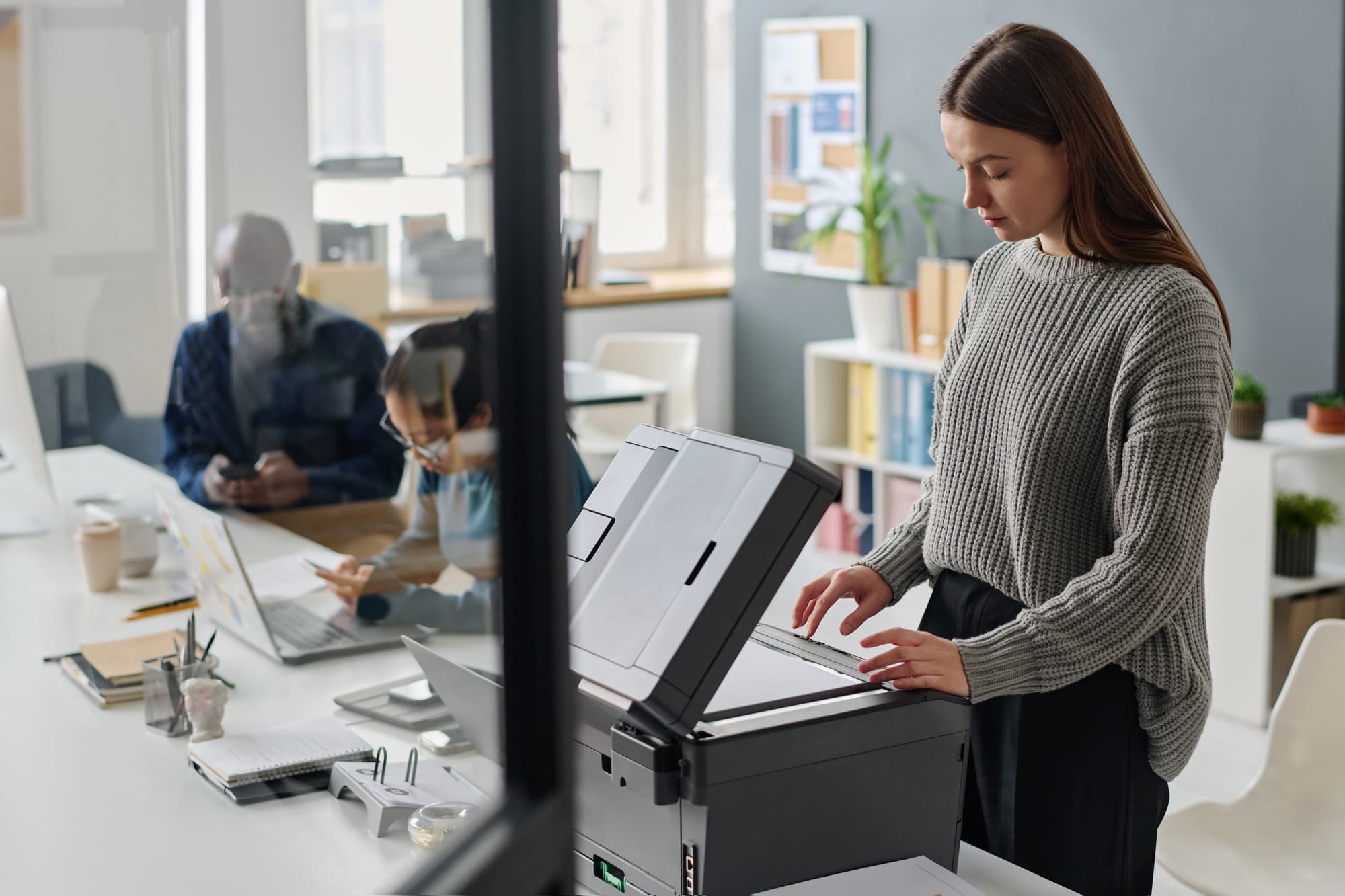
For years, businesses have pursued the vision of the “paperless office.” Advances in cloud computing, electronic signatures, mobile technology, and digital collaboration have fundamentally changed how organizations create, share, and manage information. As a result, many small and medium-sized businesses have come to believe that investing in modern print infrastructure is no longer necessary.
The reality is quite different. While organizations may print fewer documents than they did a decade or two ago, the role of the office printer has evolved dramatically. Today’s multifunction printers (MFPs) are no longer just devices that produce paper copies. They serve as intelligent hubs for capturing, managing, securing, and distributing information throughout the organization. Rather than becoming obsolete, print infrastructure has become an important component of a successful digital transformation strategy.
Businesses have certainly reduced their reliance on paper in many areas. Electronic invoicing, cloud-based file storage, digital signatures, and online collaboration platforms have streamlined countless workflows and eliminated unnecessary printing.
However, very few organizations have become truly paperless. Instead, they have become more selective about when and why they print.
Many business processes continue to require printed documents. Contracts, shipping labels, customer proposals, financial reports, compliance documentation, marketing materials, and employee onboarding packets remain essential in many industries. Even organizations that conduct most of their business digitally often rely on printed documents at critical points in their operations.
The goal has shifted from eliminating paper altogether to using it more efficiently and strategically.
The need for printing varies across industries, but it remains an important part of daily operations for many organizations.
Healthcare providers continue to manage patient documentation, insurance forms, prescriptions, and referral paperwork. Law firms prepare contracts, court filings, and case documentation. Manufacturers depend on production schedules, packing slips, quality assurance records, and shipping documentation to keep operations moving efficiently. Educational institutions regularly produce instructional materials, testing documents, and administrative records, while financial organizations generate reports, disclosures, and regulatory documentation.
Although digital systems support many of these workflows, printed documents often remain necessary for compliance, customer service, operational efficiency, or legal requirements. Reliable print infrastructure continues to play a supporting role in helping these organizations deliver their services effectively.
One reason this misconception persists is that many people still think of office printers as simple output devices. Modern multifunction systems, however, have evolved into sophisticated document management platforms that integrate seamlessly with today’s digital workplace.
In many offices, scanning has become just as important as printing. Employees routinely scan documents directly to email, cloud storage platforms, document management systems, or business applications. Advanced features such as Optical Character Recognition (OCR) can convert scanned documents into searchable digital files, making information easier to organize and retrieve.
Many multifunction devices also support secure user authentication, mobile printing, cloud integration, automated document routing, and workflow automation. These capabilities allow organizations to connect paper-based information with digital business processes without requiring manual intervention.
The term “paperless” often oversimplifies what businesses are actually trying to accomplish. The true objective for most organizations is document digitization.
Digitization focuses on improving how information moves throughout the business, regardless of whether that information originated on paper or in digital form. A signed contract may begin as a printed document, but it can quickly become part of a secure digital archive. An invoice received by mail can be scanned directly into an accounting system, where it enters an automated approval workflow without requiring additional manual handling.
This approach reduces administrative work, improves document accessibility, and creates more efficient business processes while still recognizing that paper documents will continue to exist in many organizations.
For many businesses, the scanning capabilities of a multifunction printer now provide greater value than the printing function itself.
Instead of manually scanning documents, naming files, organizing folders, and forwarding emails, intelligent workflows can automate the entire process. Documents can be captured, indexed, routed, and stored according to predefined business rules within seconds.
For example, invoices can be scanned directly into accounting software, employee records can be securely filed within human resources systems, and customer documents can be routed automatically to the appropriate department. These automated processes reduce repetitive tasks, minimize opportunities for human error, and allow employees to focus on higher-value work.
The growth of remote and hybrid work has changed how organizations think about document management. Employees increasingly need secure access to business information regardless of where they are working.
Modern print infrastructure supports this flexibility by integrating with cloud storage platforms, enabling secure mobile printing, and allowing scanned documents to be immediately available to authorized users across multiple locations. Rather than limiting workplace flexibility, today’s multifunction systems help connect office-based and remote employees through secure digital document workflows.
This ability to bridge physical and digital environments has become increasingly valuable as organizations continue adapting to new workplace models.
Some organizations mistakenly believe that avoiding investment in new print technology is the most environmentally responsible decision. In reality, replacing outdated equipment with modern business-class devices can often reduce an organization’s environmental impact.
Today’s multifunction systems are designed with energy efficiency and resource conservation in mind. Features such as automatic duplex printing, toner-saving modes, reduced power consumption, and secure print release help minimize waste while improving operational efficiency. Fleet consolidation can also reduce the number of devices consuming electricity throughout the office while simplifying maintenance and reducing supply inventories.
Sustainability is not simply about printing fewer pages. It is about using smarter technology that helps organizations reduce waste while maintaining productivity.
Digital transformation is fundamentally about improving how information moves throughout an organization. While cloud software, automation platforms, and collaboration tools receive significant attention, printed documents continue to play an important role in many business processes.
Successful organizations recognize that print infrastructure should complement their digital initiatives rather than compete with them. Modern multifunction systems serve as secure gateways between physical documents and digital information, allowing businesses to capture, process, and distribute information more efficiently than ever before.
When properly integrated into broader technology strategies, print infrastructure supports greater productivity, stronger security, improved compliance, and better collaboration across the organization.
The future of business is not defined by the complete elimination of paper. Instead, it is defined by creating intelligent workflows that allow physical and digital documents to work together seamlessly.
Organizations that invest in modern print infrastructure gain access to capabilities that extend well beyond printing. Intelligent scanning, cloud integration, workflow automation, secure document handling, and centralized fleet management all contribute to a more efficient and connected workplace.
At DEX Imaging, we help businesses build document ecosystems that support both current operational needs and future digital initiatives. By aligning print technology with broader business goals, organizations can improve productivity, strengthen security, reduce operational costs, and create workflows that are ready for whatever comes next.